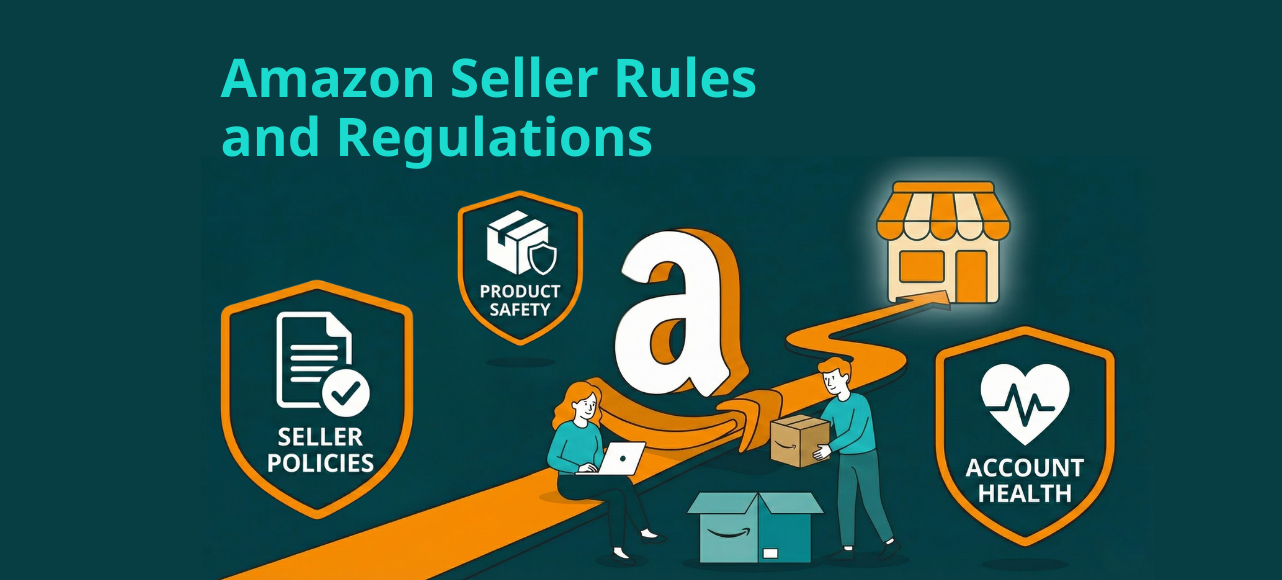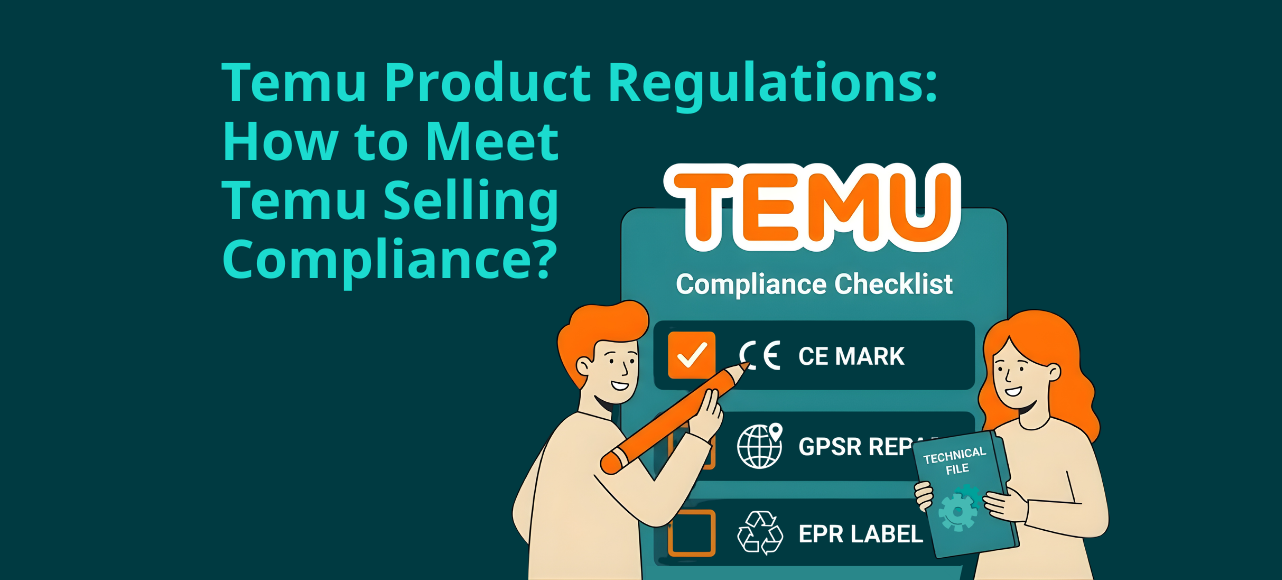




Selling on Amazon Europe is one of the fastest ways to reach customers across multiple EU countries.
But it’s also where many sellers run into trouble.
The challenge isn’t opening an account or creating a product listing. It’s understanding how Amazon Europe works, how EU rules apply across countries, and what Amazon expects before your product is allowed to sell.
This guide explains how to sell on Amazon Europe step by step, with a focus on what actually blocks or delays sellers in practice.
What does “Amazon Europe” actually mean?
Amazon Europe is not one marketplace.
When you sell in Europe, you are usually selling across several country-specific marketplaces at once, including Germany, France, Italy, Spain, the Netherlands, Poland, and Sweden - all operated under Amazon.
While the platform looks similar in each country, the requirements are not identical:
- Each country has its own language rules
- Enforcement priorities differ
- EU-level product rules are applied locally
This is why a product can sell without issues in one country but be blocked in another.
Your Roadmap to
Selling in Europe
This practical guide breaks down how EU-level product rules are applied locally, why listings get blocked in one country but not another, and what sellers need to prepare before expanding across Europe.

Step 1: Set up an Amazon Europe seller account
To sell in Europe, you need a European Amazon Seller account.
Most brands choose a Professional account, which is required if you:
- Sell under your own brand
- Plan to scale across multiple EU countries
- Use Fulfilled by Amazon (FBA)
During setup, Amazon will request:
- Company and identity details
- VAT information (or proof you are registering)
- A bank account for EU payouts
This is also where Amazon starts evaluating whether you are prepared to sell in the EU - not just commercially, but operationally.
.webp)
Step 2: Choose how you fulfil orders
You can sell on Amazon Europe using different fulfillment models, depending on how much control you want over storage, shipping, and customer service.
Fulfilled by Amazon (FBA)
Amazon stores, ships, and handles customer delivery. It improves conversion rates - but comes with stricter checks.
Fulfilled by Merchant (FBM)
You handle storage and shipping yourself. More control, but the same EU product rules still apply.
Important: Using FBA does not shift responsibility away from you. If you sell under your own brand, Amazon treats you as the responsible seller.
.png)
Step 3: Understand how Amazon checks products in the EU
Amazon Europe increasingly acts as a gatekeeper, actively reviewing product listings, documentation, and regulation details before allowing products to be listed or continue selling across EU marketplaces.
- Product safety documentation
This is used to confirm that the product meets basic safety expectations for its category. For example, Amazon may ask for safety information on an electrical product after a complaint or during a category-wide review, even if the product has been selling for months. - Declarations or confirmations for regulated products
Regulated categories often require formal confirmations that specific rules are met. Sellers commonly encounter this when Amazon asks for a declaration after changing a listing title, updating images, or enrolling the product in a new marketplace. - User manuals
Manuals are frequently requested to verify that customers receive clear instructions and warnings. A typical scenario is Amazon requesting a manual within 48–72 hours and suppressing the ASIN if the seller can only provide a generic or outdated PDF that does not clearly match the product. - Responsible Person details
For EU and UK sales, Amazon may request details of the entity responsible for the product. Sellers often run into trouble when manuals or labels do not include this information, even though the listing itself appears complete. - Environmental registration numbers
Amazon increasingly checks registration numbers tied to environmental responsibility schemes. These requests often appear suddenly, for example when selling into Germany or expanding to additional EU countries, and listings may be paused until valid numbers are provided.
From the seller’s perspective, these requests can feel unexpected or repetitive. From Amazon’s perspective, they are part of ongoing enforcement. If the requested documents cannot be provided quickly, Amazon may suppress the listing first and ask questions later - which is why preparation matters more than reaction.
Your Roadmap to
Selling in Europe
This practical guide breaks down how EU-level product rules are applied locally, why listings get blocked in one country but not another, and what sellers need to prepare before expanding across Europe.

Step 4: Prepare your user manual
For most physical products sold in the EU, a user manual is required. Amazon treats the manual as part of the product itself, because it is how customers receive safety instructions and correct usage information.
Amazon checks whether:
- A manual exists
- It includes safety and usage information
- It is available in the language of each country where the product is sold
These checks often happen after a product is already live. For example, a seller may successfully launch a kitchen appliance and start generating sales, only for Amazon to request the user manual during a routine review. If the seller cannot provide a complete manual quickly, the ASIN may be suppressed even though there are no customer complaints.
Common problems include:
- English-only manuals
- Generic PDFs from suppliers
- Manuals that don’t match the actual product
A frequent scenario is a seller relying on a factory-supplied PDF that covers multiple similar models. When Amazon reviewers compare the manual to the listing, they notice references to features, voltage, or usage scenarios that don’t apply to the listed product. In other cases, the manual exists but only in English, which immediately blocks sales in countries like Germany or France.
See how Pergamon fixes these problems: Watch how a brand creates a market-ready coffee machine manual from scratch in under 2 minutes, rather than relying on an expensive technical writing agency.
Even when the product itself is safe, missing or incorrect manuals are a frequent reason for listing suspensions.
If you’re unsure what Amazon expects, it’s worth reviewing what qualifies as a product manual and how user manuals are defined in EU markets.
Step 5: Handle EU languages properly
Europe is multilingual by default, which means selling on Amazon Europe often requires managing multiple product manual languages, localised listings, and country-specific customer expectations across different marketplaces.
If you sell in:
- Germany → German manual required
- France → French manual required
- Spain → Spanish manual required
Machine-translated manuals often cause issues, especially for safety instructions and warnings. Errors here are one of the most common triggers for Amazon follow-ups and enforcement actions.
As soon as you sell in more than one country, manual and documentation management becomes a scaling problem - not a one-off task.
See the solution: Pergamon automates the translation of your technical terms into EU-compliant languages instantly.
Step 6: Sort VAT and environmental registrations
Depending on where you store or sell goods, you may need additional registrations beyond product documentation. These requirements depend on where your inventory is located and which markets you sell into.
You may need:
- EU VAT registrations
- Packaging registrations
- Electronics or battery registrations
Amazon increasingly checks these during onboarding and periodic account reviews, especially when sellers use FBA or store inventory in countries like Germany or France. Listings are often restricted not because the product is unsafe, but because a required registration number is missing or outdated.
You don’t need everything completed on day one - but Amazon expects a clear, structured plan. Sellers who prepare registrations early avoid sudden listing restrictions later.
Step 7: Launch, monitor, and respond fast
Once your products are live, Amazon’s review process does not stop. Listings can be reviewed again at any point, often triggered by routine audits, category updates, or expansion into new EU marketplaces.
Once your products are live:
- Amazon can request documents at any time
This commonly happens months after launch. For example, a product may sell steadily until Amazon requests a user manual or safety confirmation during a category-wide review. If the seller cannot respond quickly, the ASIN may be suppressed even though there were no customer complaints. - Issues in one country can affect others
Amazon marketplaces are connected. A documentation problem discovered in Germany - such as a missing local-language manual - can lead Amazon to review the same product in other EU countries, increasing the risk of wider suppression. - Response speed matters
Amazon often sets short deadlines, sometimes 48–72 hours. Sellers who rely on suppliers to locate manuals or recreate documents under pressure frequently miss these windows and see listings taken offline first.
Sellers who succeed in Europe prepare documentation before requests arrive. Instead of scrambling after a suspension notice, they maintain ready-to-submit manuals, registrations, and contact details so they can respond immediately when Amazon asks.
Why sellers struggle to scale on Amazon Europe
Most sellers don’t fail on Amazon Europe because their products are bad. In fact, many have strong demand and good reviews. The problem usually appears only once they try to scale.
They fail because:
- Documentation is scattered
Manuals, declarations, and registrations are often stored across emails, supplier folders, and local drives. When Amazon requests documents, sellers lose time just figuring out which version is the latest. - Manuals are outdated or inconsistent
A small product update - a new component, address change, or safety note - may be reflected in one manual but not others. Amazon reviewers then spot inconsistencies between listings, manuals, and uploaded files. - Each country is handled differently
Sellers often fix issues country by country. A German listing gets updated with a new manual, but the French and Italian versions are left unchanged. This leads to repeated suppressions for the same root issue. - Updates aren’t reflected everywhere
One correction should apply across all SKUs and markets, but when managed manually, updates are missed. Amazon may later flag another ASIN for an issue that was already “fixed” elsewhere.
Managing this manually can work for one SKU in one country. It breaks the moment you scale to multiple products, languages, and EU marketplaces. At that point, the challenge is no longer knowing the rules - it’s keeping documentation consistent, current, and ready across Amazon Europe as a whole.
How Pergamon helps
Pergamon is the first AI-powered CCMS that automates product user manual creation. We put structure and EU market requirements on autopilot- so you focus on products, not paperwork.
For brands, it turns a complex regulation process into a 30-minute path from product data to market-ready PDF. It gives you enterprise infrastructure that allows you to scale documentation without scaling your headcount.
Need a head start? Think of it as Autopilot for user manuals. Start a 7-day free trial and get your products Amazon-ready today.